- The Resilient Leaders Playbook
- Posts
- The Decision-Making Playbook: Blending Analysis, Intuition, and Action Under Pressure
The Decision-Making Playbook: Blending Analysis, Intuition, and Action Under Pressure

Justin M. Fitzpatrick
February 03, 2025
A single decision can shape the fate of a company, a team, or even a nation. From boardrooms to battlefields, success and failure are often separated by mere moments of decisive action. The best decision-makers—whether leading global corporations or competing at the highest levels of sport—seamlessly blend analysis and intuition to act under pressure. But how does one refine this skill? And in a world drowning in data, do we risk letting analysis suffocate instinct?
Mastering decision-making is about more than just cold, calculated logic or reckless, gut-driven choices. Instead, elite decision-makers leverage three core pillars: a structured approach to analysis, a refined instinct honed by experience, and the courage to act when the moment demands. But before we explore those, the first challenge is knowing what deserves our attention.
Prioritization: The Eisenhower Matrix and Strategic Decision-Making
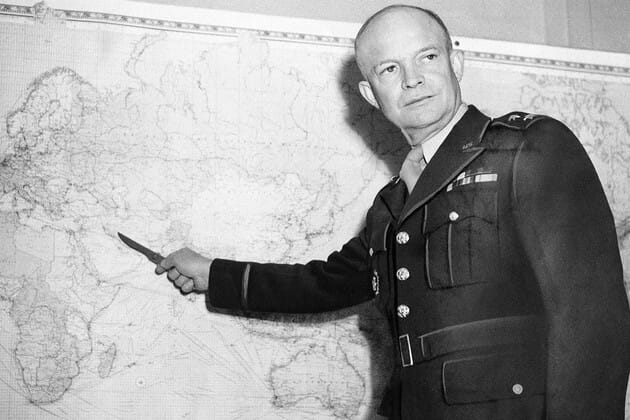
Dwight D. Eisenhower makes a point about military operations in Europe on July 17, 1942. | AP Photo
With countless decisions competing for attention, how do leaders separate the critical from the trivial? The best decision-makers don’t just react; they prioritize with precision. This is where the Eisenhower Matrix becomes an invaluable tool.
Named after President Dwight D. Eisenhower, who used it as a general, NATO commander, and U.S. president, the matrix helps leaders categorize tasks based on urgency and importance—ensuring they focus on what truly matters.
How It Works:
The Eisenhower Matrix consists of four quadrants, each dictating how a task should be handled:
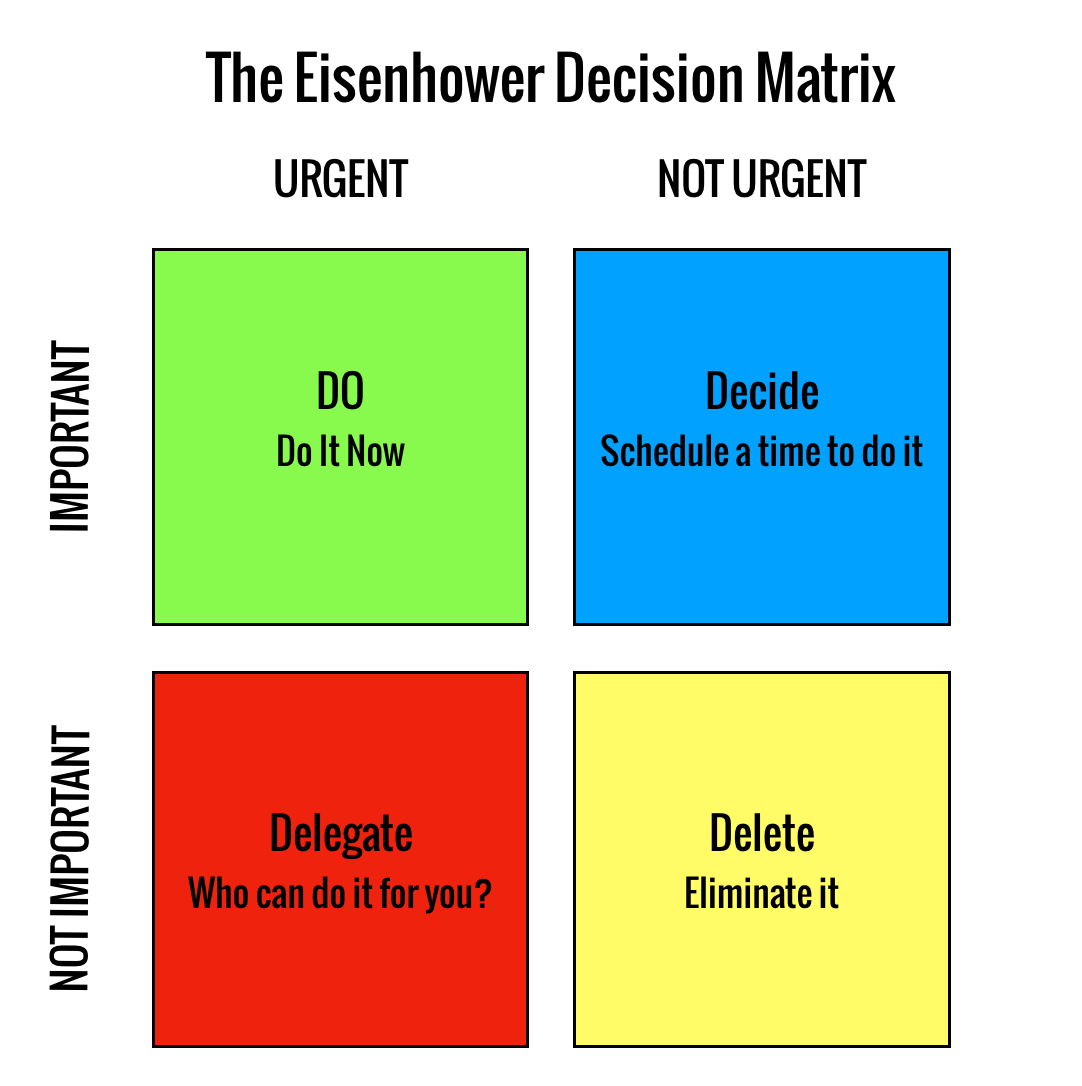
1. Urgent & Important: Do it immediately – These are high-priority, time-sensitive tasks that require immediate attention. Examples include crisis management, closing a critical business deal, or an athlete making a game-winning play under pressure.
2. Urgent but Not Important: Delegate it – These tasks demand attention but don’t require personal involvement. Smart leaders pass these on to trusted team members, freeing themselves for higher-value decisions.
3. Not Urgent but Important: Schedule it – Strategic planning, training, and long-term business development fall into this category. These decisions may not require immediate action, but they are essential for long-term success.
4. Not Urgent & Not Important: Eliminate it – Distractions, unnecessary meetings, or low-value tasks can drain focus and energy. Great decision-makers recognize when to ignore or remove tasks that don’t contribute to their goals.
The Matrix in Action: From Mergers to Match-Winning Plays
How do the world’s best CEOs cut through the noise and focus on what truly moves the needle? Whether evaluating a billion-dollar merger or deciding the next move in a crisis, the Eisenhower Matrix helps leaders separate urgent distractions from mission-critical decisions.
In elite sport, coaches and players sift through mountains of data, distinguishing urgent tactical adjustments from long-term strategic improvements. The best teams know that focusing on the wrong priority at the wrong time—even if backed by good data—can cost them a championship.
Why It Matters for Decision-Making
In an age of information overload, prioritization is just as critical as the decision itself. A great leader doesn’t just make decisions—they make the right decisions at the right time. By applying the Eisenhower Matrix, decision-makers free themselves from the tyranny of urgency, ensuring that their energy is spent where it delivers the greatest impact.
But once priorities are set, the real challenge begins: how do the best decision-makers process information, trust their instincts, and take action under pressure? This brings us to the three foundational pillars of elite decision-making.
The Three Pillars of Decision-Making
1️⃣. Analysis: The Foundation of Rational Thinking
Analysis forms the bedrock of sound decision-making, providing leaders with the data and logic necessary to make informed choices. Whether in business, sports, or military strategy, the ability to assess facts, evaluate risks, and anticipate outcomes is essential.
In professional sports, data analytics revolutionized decision-making—Moneyball, the famed strategy used by the Oakland Athletics, demonstrated how statistical analysis could outperform traditional scouting methods. Similarly, in business, Jeff Bezos emphasized data-driven decision-making at Amazon, stating, “If you can’t measure it, you can’t improve it.”

Moneyball, the 2011 film starring Brad Pitt.
However, excessive analysis can lead to paralysis by overthinking, where fear of making the wrong move results in no move at all. Consider Kodak, which had the first digital camera prototype decades before its competitors—yet failed to act, fearing it would cannibalize their film business. The result? They were left behind in the digital revolution.
The best decision-makers, like Warren Buffett, know when to dive deep into analysis and when to trust that they have enough information to act. As he wisely put it, “Risk comes from not knowing what you’re doing.”
2️⃣. Intuition: The Wisdom of Experience
While analysis provides structure, intuition adds depth—allowing experienced decision-makers to process information at a subconscious level. Intuition is often mistaken for guesswork, but it is actually a refined ability developed through years of pattern recognition.
In sports, Lionel Messi’s ability to anticipate defenders’ movements is not random but rather the product of thousands of hours spent studying and playing the game. Similarly, Steve Jobs relied on intuition to revolutionize the tech industry, famously stating, “You have to trust that the dots will somehow connect in your future.”
Neuroscience supports this: studies show that seasoned experts develop an “adaptive unconscious” that enables split-second decisions. This is why top investors sense market shifts before the data confirms it, and experienced firefighters detect danger before seeing flames.
The key is not blind faith in intuition but developing it through repeated exposure, reflection, and refinement.
3️⃣. Action: The Courage to Commit
Even the most thorough analysis and refined intuition mean little if a leader lacks the courage to act. History is full of individuals who hesitated at critical moments and lost opportunities, while those who made bold decisions under pressure often defined their industries, teams, and nations.
One powerful example is Captain Chesley “Sully” Sullenberger’s decision to land US Airways Flight 1549 on the Hudson River in 2009. When both engines failed due to a bird strike, Sully had seconds to assess his options. Air traffic control suggested returning to the airport, but his experience and judgment told him they wouldn’t make it.

Captain Chesley “Sully” Sullenberger’s decision to land US Airways Flight 1549 on the Hudson River in 2009
In that moment, he had to commit—choosing the river as the safest option and saving all 155 passengers on board. Reflecting on his decision, he later said, “I had to force calm on the situation. You must take decisive action, even in uncertainty.”
The best decision-makers understand that certainty is a luxury, and hesitation is a risk. They commit, adjust when necessary, and move forward with confidence.
Conclusion: Mastering the Art of Decisive Leadership
Great decision-making is neither purely scientific nor purely instinctive—it is the fusion of both. The best leaders, athletes, and executives recognize that logic and intuition are not competing forces but complementary ones.
They analyze. They trust their instincts. And most importantly, they act.
The world’s best decision-makers don’t just analyze and trust their instincts—they step forward when it matters most. Will you be the one who hesitates, or the one who makes the call?
If you found this valuable, don’t keep it to yourself—like, comment, and share this with fellow leaders and decision-makers!
For more insights on resilience, leadership, and high-performance decision-making, sign up for The Resilient Leaders Playbook today!